

The Hidden Cost of Manual Material Mixing in Plastic Processing
In many injection moulding and extrusion facilities, materials are still mixed manually before entering the production process. Operators may combine virgin resin, colour masterbatch, additives, and regrind directly in containers or machine hoppers.
While this approach may appear simple, manual material mixing often introduces inconsistencies that can significantly increase production costs. Inaccurate ratios, poor material distribution, and operator error can all affect product quality and material efficiency.
Automated dosing, blending, and mixing systems are designed to eliminate these issues by delivering consistent material ratios and controlled mixing throughout the production process.
Why Material Mixing Matters in Plastic Processing
Modern plastic products rarely use a single material component. In most applications, the final formulation is made up of several elements.
These commonly include:
- Virgin polymer
- Regrind material
- Colour masterbatch
- Additives such as UV stabilisers or flame retardants
- Fillers or reinforcing materials
Maintaining precise ratios between these components is essential to ensure consistent processing and final product performance.
Even small variations in the blend can influence colour, mechanical properties, and processing stability.
What Happens When Materials Are Mixed Manually?
Manual mixing often involves operators measuring materials by eye or using basic containers to combine components before feeding them into the machine hopper.
While this may work in small scale applications, it introduces several challenges in production environments.
Inconsistent Material Ratios
Manual mixing rarely delivers the same ratio every time. Differences in measurement or operator technique can cause variations in colour concentration, additive levels, or regrind content.
These variations can lead to inconsistent product quality and increase scrap rates.
Uneven Material Distribution
Simply pouring materials together does not guarantee proper mixing. Colour masterbatch or additives may not be evenly distributed throughout the material, leading to issues such as colour streaking or uneven additive performance.
Operator Error
Manual processes depend heavily on operator accuracy. Incorrect measurements, missed ingredients, or inconsistent mixing procedures can easily occur during busy production shifts.
This creates variability that is difficult to control.
Excessive Material Usage
To avoid colour inconsistency, operators may add more masterbatch than necessary. While this reduces the risk of colour variation, it also increases material consumption.
Since masterbatch and additives are often significantly more expensive than base polymers, this can have a noticeable impact on production costs.
The Cost Impact of Poor Material Mixing
The financial impact of inaccurate material mixing is often underestimated. Even small variations in material ratios can accumulate into significant costs over time.
These costs may appear in several ways.
Increased Scrap Rates
Inconsistent material mixing can lead to parts that do not meet quality standards, increasing the amount of rejected products.
Higher Material Consumption
Overdosing colour or additives increases the cost per part produced.
Process Instability
Material inconsistencies can affect melt behaviour, cycle times, and machine settings, making the process more difficult to control.
Additional Labour
Manual mixing requires operators to spend time measuring, transporting, and preparing materials rather than focusing on machine operation or quality control.
How Automated Mixing and Dosing Systems Improve Efficiency
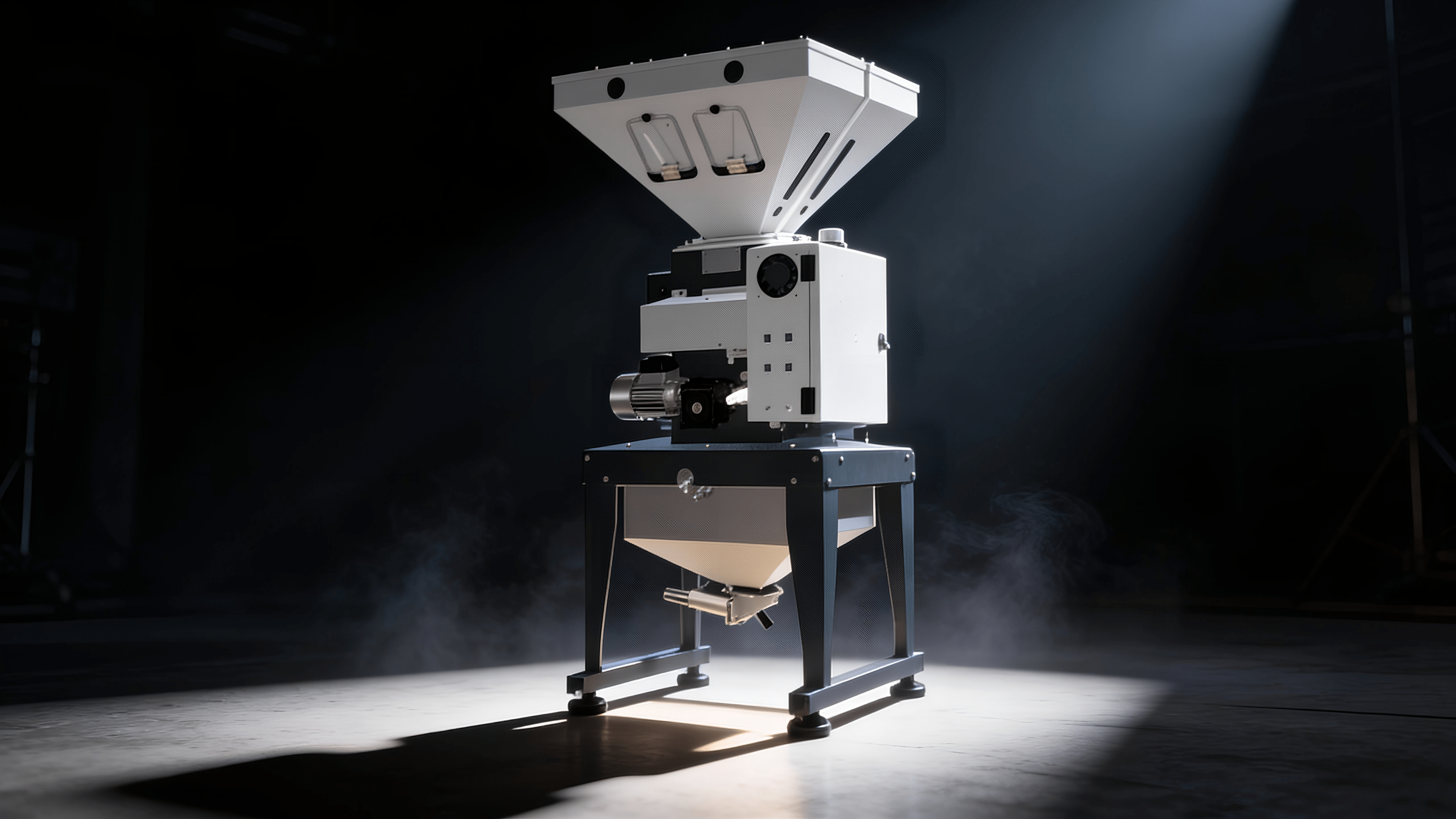
Automated material handling systems provide a controlled method of combining materials before processing. These systems can meter and mix materials accurately while maintaining consistent ratios throughout production.
Several technologies are commonly used in plastics processing.
Volumetric Dosing Units
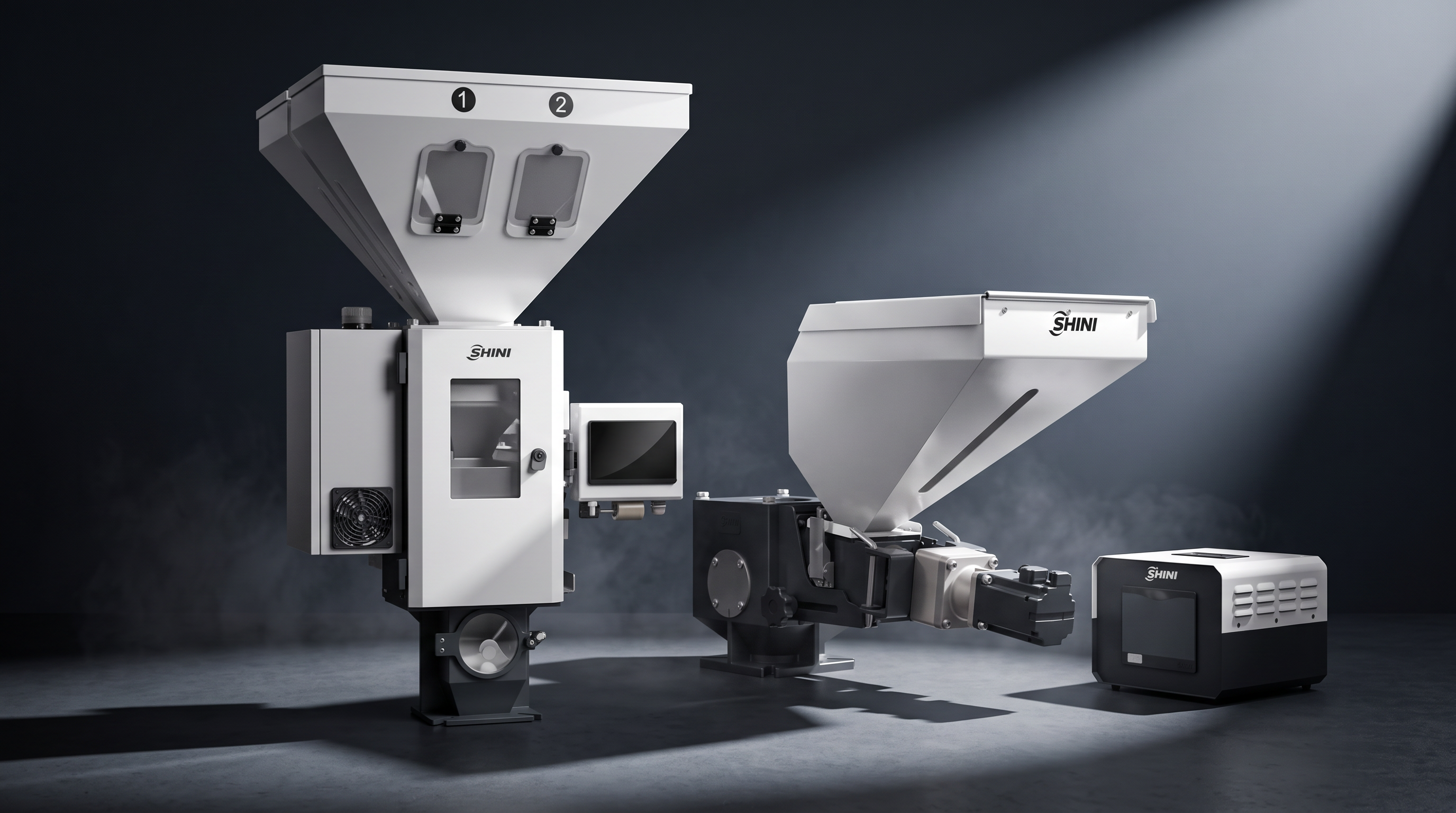
These systems measure material based on volume, typically using screw feeders or fixed dosing chambers. They are often used for colour masterbatch or additive dosing directly at the machine.
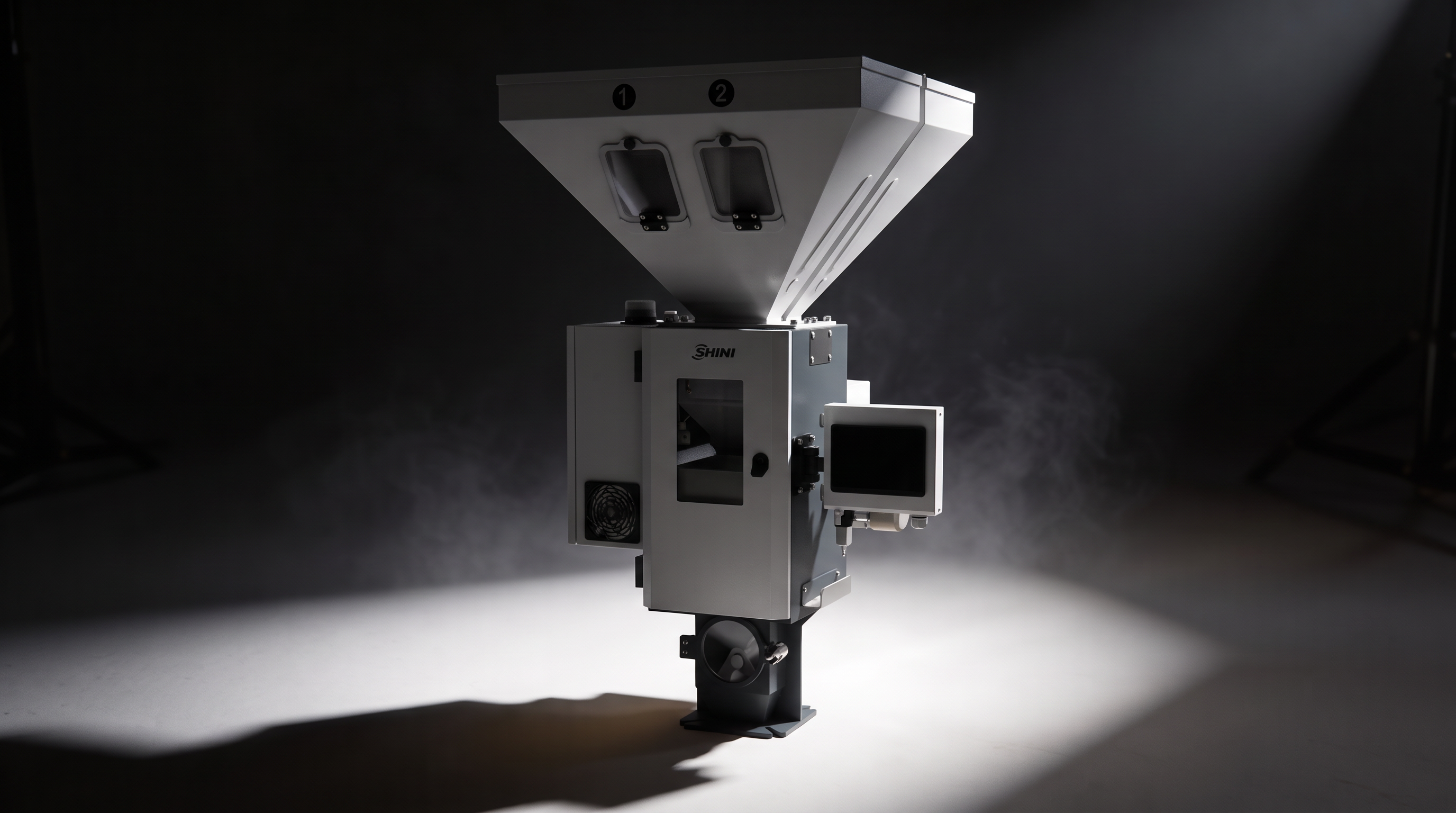
Gravimetric Blending Systems
Gravimetric systems measure materials by weight using load cells. This allows very precise control over material ratios, particularly when blending multiple materials such as virgin resin, regrind, and additives.
Mixing Chambers and Blenders
Mixing chambers ensure materials are evenly distributed before entering the machine. Proper mixing prevents colour streaking and ensures additives are evenly dispersed throughout the material.
Together, these systems help maintain consistent material formulations throughout the production process.
Benefits of Automated Material Mixing
Automated dosing and blending systems offer several operational advantages.
- Improved material ratio accuracy
- Reduced colour and additive consumption
- Lower scrap rates
- Consistent part quality
- Reduced operator involvement
By ensuring that each batch of material is mixed correctly, these systems help stabilise the production process and reduce variability.
Improving Material Control in Modern Plastics Manufacturing
As production volumes increase and materials become more specialised, accurate material handling becomes increasingly important. Small variations in colour, additives, or recycled content can have a noticeable impact on product quality and production efficiency.
Automated dosing and blending systems provide a reliable way to manage material formulations while reducing the risks associated with manual mixing.
For many injection moulding and extrusion facilities, improving material control is one of the most effective ways to reduce waste, maintain consistent product quality, and optimise overall manufacturing performance.