

Gravimetric vs Volumetric Dosing: What Is the Difference?
How the two dosing methods measure additives, masterbatch and other plastic materials.
Accurate dosing helps manufacturers control colour, additive use, material cost and finished-part quality. Two of the most common approaches are volumetric and gravimetric dosing. Both can automate material addition, but they measure the dose in different ways.
What Is Volumetric Dosing?
A volumetric doser delivers material according to the movement or speed of a dosing screw. Once calibrated, the controller relates screw revolutions or running time to an expected volume of material.
Volumetric dosing is simple, compact and economical. It is widely used for adding masterbatch or a single additive at the throat of an injection moulding machine or extruder.
What Is Gravimetric Dosing?
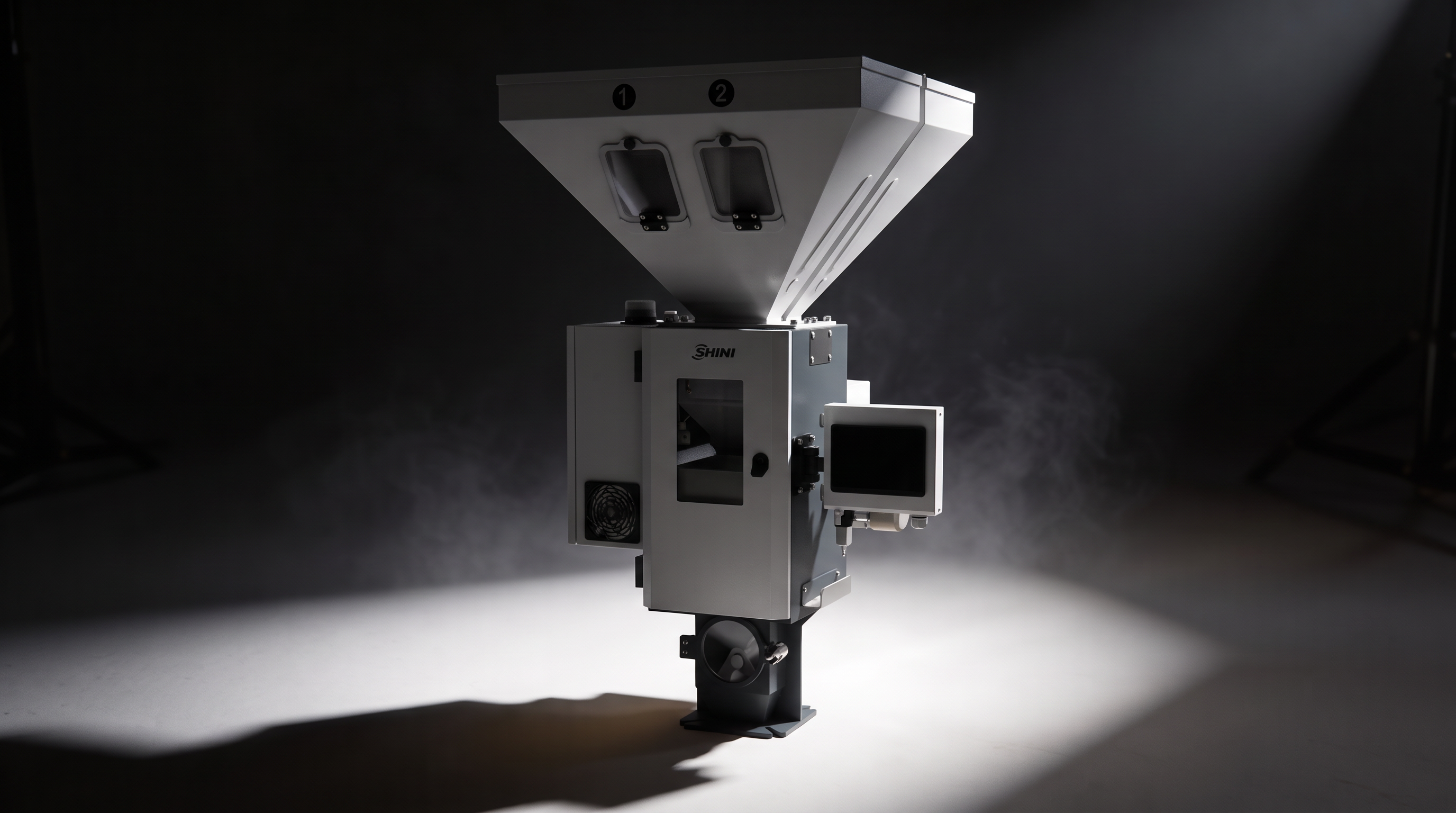
A gravimetric doser measures material by weight. Load cells detect the amount delivered, and the controller adjusts the dosing output to correct for differences between the target and actual mass.
Because the system receives weight feedback, it can compensate for changes in bulk density, pellet shape or material flow more effectively than an open-loop volumetric system.
The Key Difference
Volumetric dosing assumes that a known volume represents a predictable mass. Gravimetric dosing measures the mass directly. This difference affects accuracy, complexity, cost and the amount of process data available.
Advantages of volumetric dosing
- Lower initial cost and a compact installation.
- Straightforward operation for stable, free-flowing materials.
- Well suited to simple masterbatch and additive applications.
- Relatively quick cleaning and material changes when correctly configured.
Advantages of gravimetric dosing
- Closed-loop weight control improves repeatability.
- Automatic correction can accommodate changes in material behaviour.
- Material consumption and dosing performance can be monitored more closely.
- Useful where expensive additives or tight formulation tolerances justify greater control.
Which System Should You Choose?
Volumetric dosing can be the right choice when the material is consistent, the recipe is simple and minor variation has little effect on the product. Gravimetric dosing becomes more attractive when accuracy has a high commercial value, material characteristics vary or usage data is important.
The decision should consider the complete cost of variation. A cheaper dosing unit is not economical if overdosing wastes masterbatch or if colour variation causes rejected components. Equally, a sophisticated system may be unnecessary for a forgiving application.
Factors That Affect Dosing Accuracy
- Material bulk density, pellet size and flow characteristics.
- Dosing screw or feed mechanism selection.
- Vibration from nearby processing equipment.
- Poor calibration or changes of material without recalibration.
- Bridging, static or inconsistent refill of the dosing hopper.
A More Controlled Material Recipe
Shini UK supplies volumetric and gravimetric dosing equipment as well as blenders, mixers and proportional valves. The correct solution depends on the number of ingredients, required accuracy, throughput and how often recipes change. Discuss the material and process with Shini UK before selecting a system.