

What Is a Gravimetric Blender and How Does It Work?
How batch weighing creates repeatable recipes from virgin material, regrind, masterbatch and additives.
Plastic products often require more than one material component. A typical recipe may contain virgin polymer, regrind, colour masterbatch and an additive. A gravimetric blender automates the measurement and mixing of these ingredients by weight.
What Is a Gravimetric Blender?
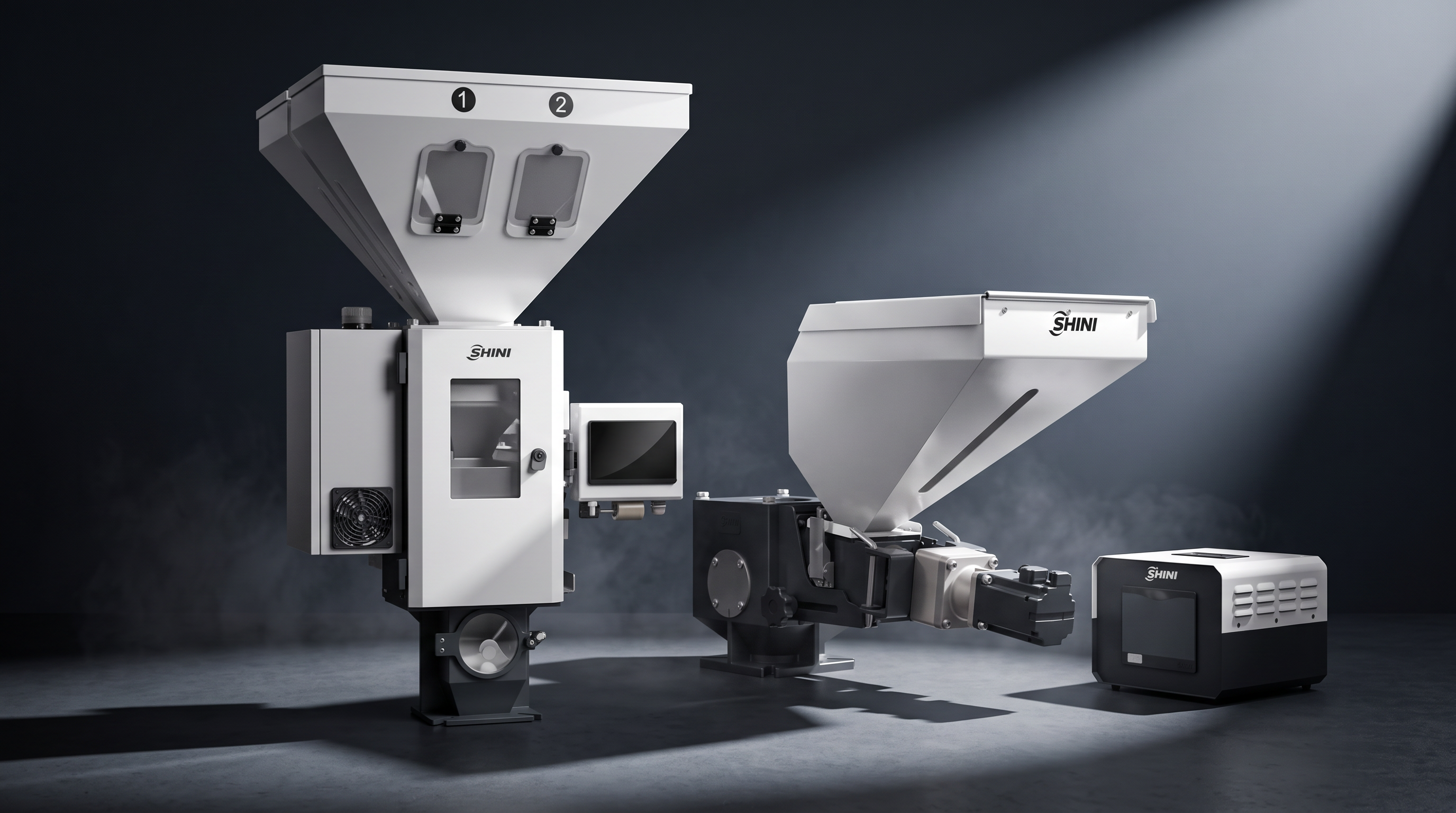
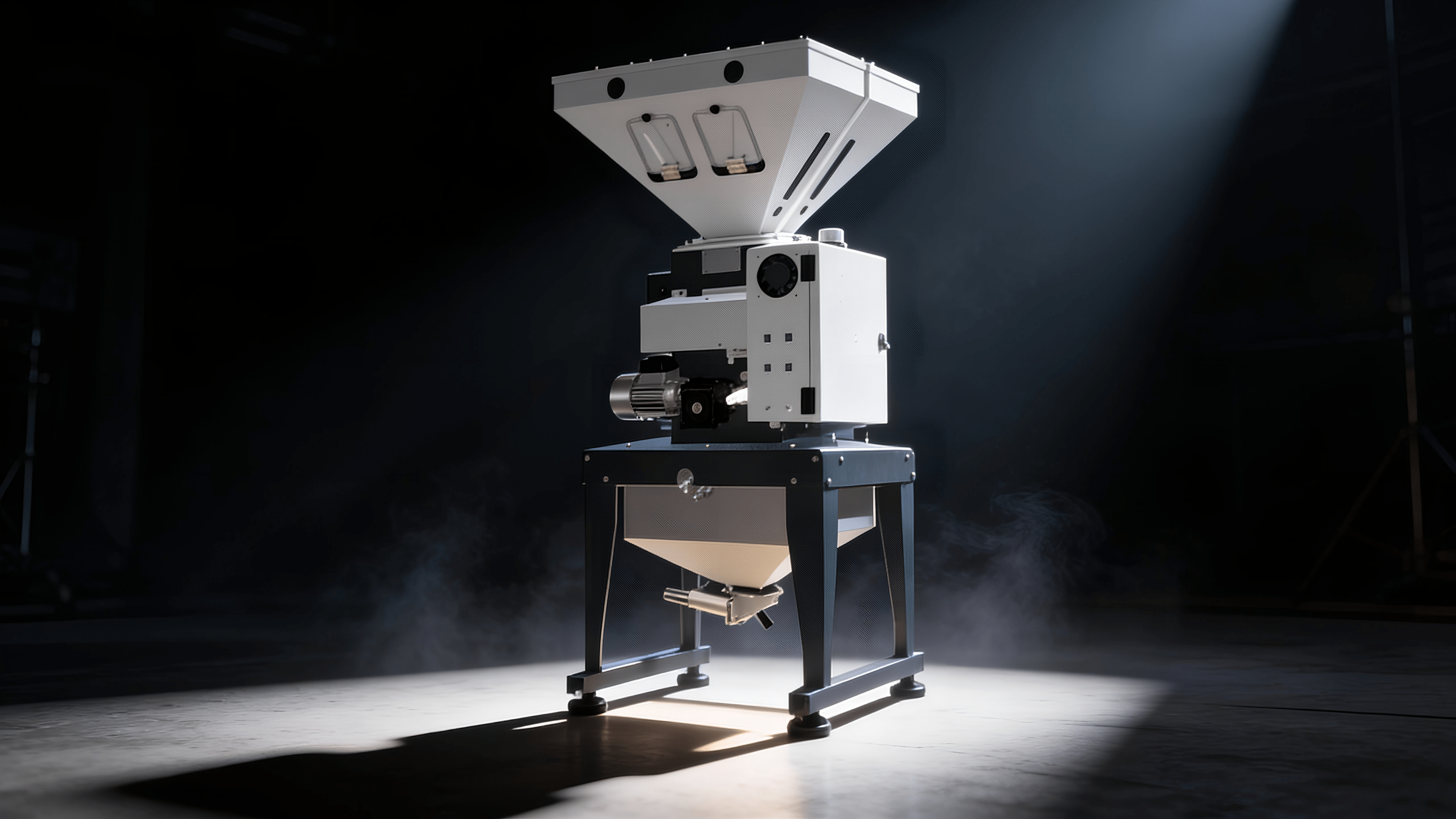
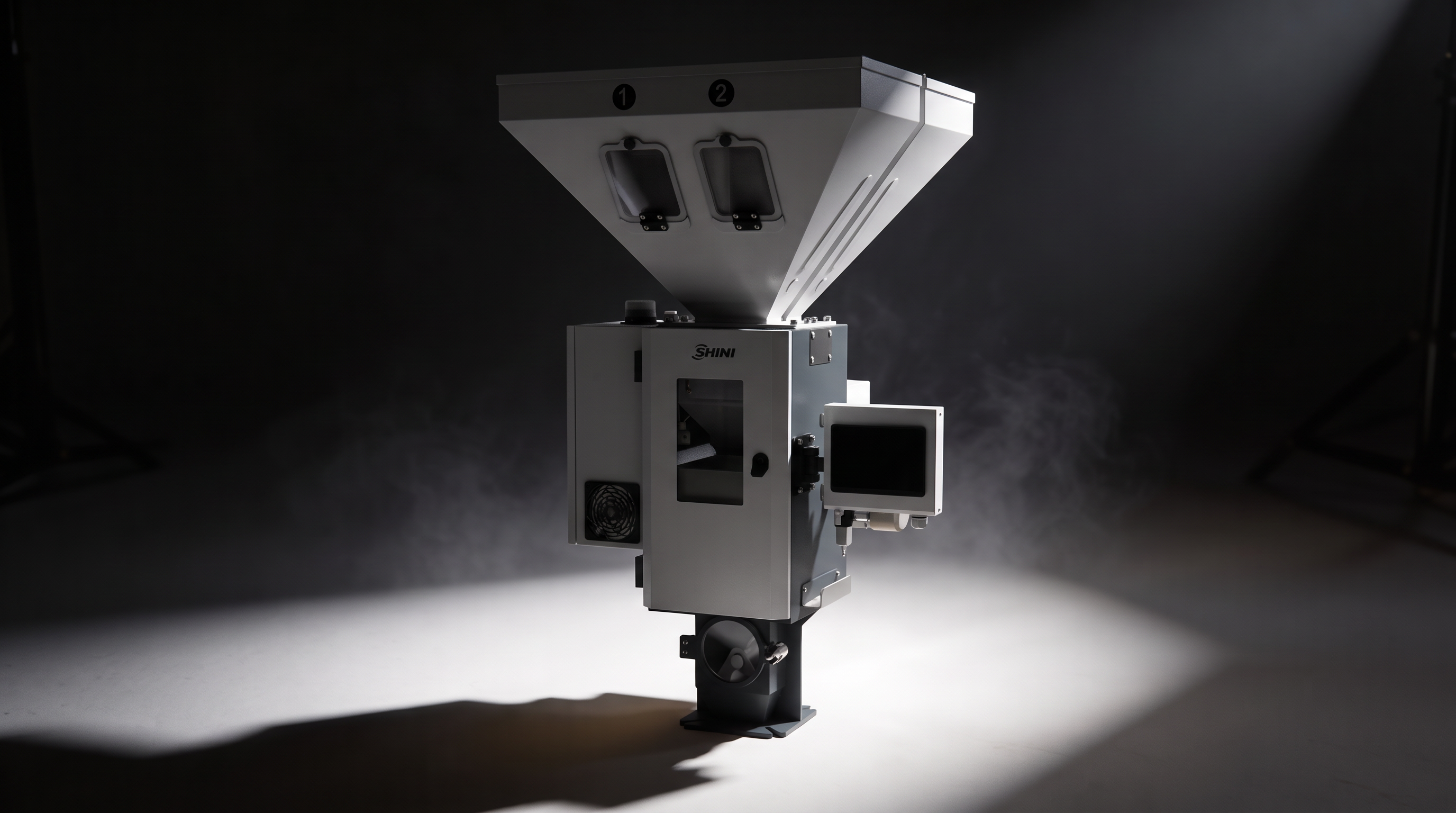
A gravimetric blender is a material-preparation unit that weighs individual ingredients into a batch and mixes them before they enter the processing machine or a downstream hopper. Load cells provide weight feedback so the controller can compare the actual amount of each ingredient with the recipe target.
Unlike a simple mixer, the blender controls both proportioning and mixing. Unlike a volumetric doser, it measures delivered mass rather than relying only on screw speed or volume.
How Does It Work?
- Each recipe ingredient is held in a separate material hopper.
- The controller opens a valve or operates a feeder for the first material.
- Load cells measure the amount entering the weigh chamber.
- The system repeats the process for each remaining ingredient.
- The completed batch drops into a mixing chamber.
- A mixer distributes the ingredients before the blend is discharged to the process.
The controller can make small corrections between batches if an ingredient overshoots or undershoots. This closed-loop action supports repeatability even when material flow changes.
What Materials Can Be Blended?
Common ingredients include virgin pellets, clean regrind, masterbatch and pelletised additives. Powders, sticky materials, flakes or very different particle sizes may need specialist feeding devices or additional testing to confirm reliable flow and mixing.
Why Use a Gravimetric Blender?
- Improve recipe repeatability and colour consistency.
- Control regrind percentage more accurately.
- Reduce waste from overdosing expensive masterbatch or additives.
- Store recipes for quicker, more controlled product changes.
- Provide material-use information for production and costing.
- Reduce manual weighing and mixing around the processing machine.
Where Is the Blender Installed?
A blender can be mounted directly above an injection moulding machine or extruder, installed on a mezzanine, or positioned in a central material-preparation area. Machine mounting shortens the route to the feed throat. Central installation may improve access, cleanliness and serviceability but requires a controlled method of conveying the finished blend.
How Do You Select the Right Blender?
Start with maximum hourly throughput and the number of ingredients. Then review the smallest required percentage, material bulk density, recipe-change frequency, mounting space and integration with loaders or a central conveying system. The blender must be able to dose the smallest component accurately as well as handle total output.
Cleaning access is important when colours or materials change frequently. Removable hoppers, smooth contact surfaces and a clear changeover method help prevent contamination and reduce lost production time.
Good Blending Still Needs Good Material Control
Accurate weighing will not correct contaminated regrind, bridging material or poor segregation. Ingredient storage, loader selection, dust control and calibration should form part of the same process. Load cells must also be protected from vibration and mechanical interference.
A Repeatable Recipe at the Machine
Shini UK supplies gravimetric blenders, gravimetric and volumetric dosers, proportional valves and mixers. The team can help define throughput, ingredient count and installation arrangement, then connect the blender with the wider material-handling system.